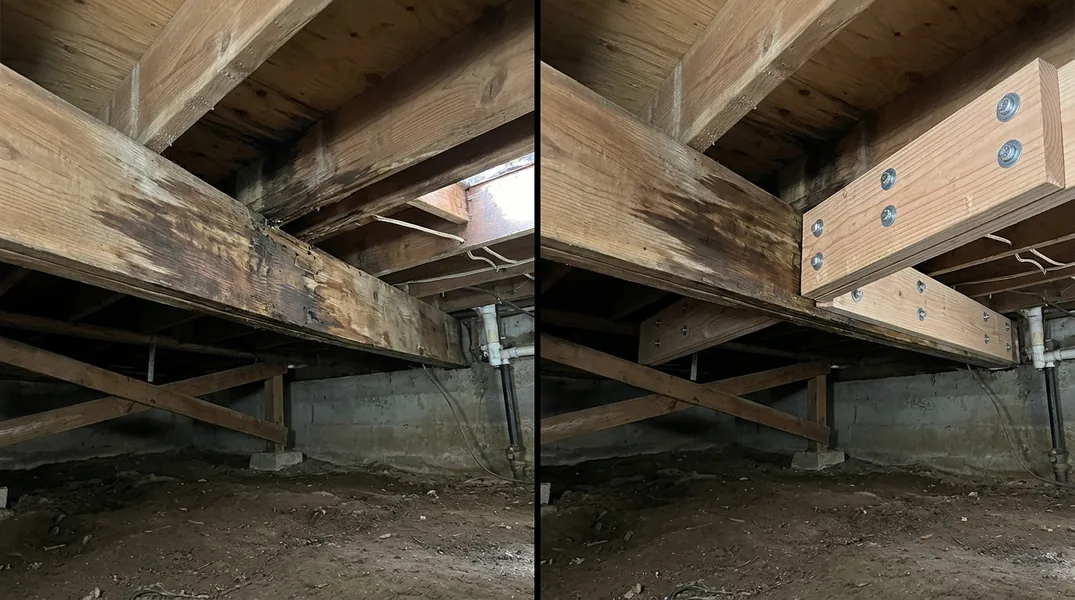
Why Is My Floor Sagging? Common Causes in Older Portland Homes
If you own an older home in Portland, you may have noticed your floors aren't quite level anymore. That gentle slope from one room to another, or the slight bounce when you walk across certain areas, isn't just a quirk of vintage architecture. Sagging floors are a sign that something structural needs attention, and understanding the root cause is the first step toward fixing the problem.
The most common culprit behind sagging floors in older homes is damage to the floor joists, the horizontal wooden beams that support your floor. In Portland's wet climate, wood rot and dry rot are frequent offenders. When moisture penetrates the wood over decades, it weakens the fibers, causing the joists to lose their load-bearing capacity. Over time, the weight of the floor, walls, and everything in the house gradually compresses these weakened joists, creating that telltale sag.
Another major cause is Termite Damage Repair issues. Termites silently hollow out wood from the inside, leaving the outer shell intact while destroying the structural integrity. Foundation settlement is another possibility, especially in homes built on clay soil common to the Pacific Northwest. As the foundation shifts, it can cause uneven support for the joists above. Finally, inadequate support from undersized joists, missing support posts, or a failing beam can all contribute to sagging over time.
How Floor Joists Fail: Understanding the Structural Problem
Floor joists are engineered to span certain distances and carry specific loads. When they fail, your entire floor system becomes compromised. A single weakened joist might not seem like much, but floors are designed as systems. One failing joist forces adjacent joists to carry extra weight, which accelerates their deterioration and creates a cascading effect of structural failure.
Wood Rot & Dry Rot Repair is often the underlying issue because moisture gets into the joist through cracks in the foundation, poor drainage around the house, or inadequate ventilation in crawl spaces. Dry rot, despite its name, actually requires moisture to develop. It spreads through wood, breaking down the cellulose that gives the wood its strength. By the time you notice sagging, the damage is usually significant.
Beyond rot, joists can fail due to excessive deflection over time. Even if the wood isn't rotted, years of normal use, combined with seasonal wood movement and the weight of renovations or added furnishings, can cause joists to bow or sag. The problem is self-reinforcing: as the joist sags, water pools in the low spots, accelerating rot, which causes more sagging. This is why addressing the issue promptly is critical.
Sagging Floor Repair Options: From Minor Fixes to Major Restoration
The repair approach depends on the severity of the damage and how many joists are affected. For minor sags affecting only one or two joists, sistering floor joists is often the most cost-effective solution. Sistering involves bolting a new, pressure-treated joist alongside the damaged one, essentially doubling the support at that location. This technique transfers the load from the weak joist to the new, strong one while leaving the old joist in place.
Floor Joist & Subfloor Repair becomes more complex when rot has eaten away significant portions of the joist. In these cases, the damaged section may need to be cut out and replaced with new wood, or the entire joist may need replacement. If multiple joists are compromised, or if the main support beam has failed, you may need Beam Replacement & Load-Bearing Wall Removal services to restore proper structural support.
For homes with extensive sagging, temporary support posts may be installed while the permanent repair is underway. This ensures the floor doesn't collapse during the work and protects the structural integrity of walls and upper floors. Some repairs also require adjusting or installing new support posts in the crawl space or basement. The goal is always to restore the floor to its proper level (or as close as structurally possible) while ensuring the joists can safely carry the home's weight for decades to come.
Sagging Floor Repair Cost in Portland: What to Budget
The pricing for sagging floor repair varies widely depending on the scope of damage and the repair method chosen. A simple sistering job affecting one or two joists might cost between $1,500 and $3,500, while more extensive repairs involving multiple joists or partial joist replacement can range from $5,000 to $15,000 or more. If the main support beam needs replacement or if the foundation requires underpinning, costs can easily exceed $20,000.
Several factors influence the final cost. The accessibility of the joists matters greatly, as repairs are cheaper if the crawl space is open and dry versus cramped or flooded. The extent of rot or damage determines whether joists can be sistered or must be fully replaced. The number of joists involved multiplies the labor and materials needed. Additionally, if the sagging has caused secondary damage to walls, flooring, or other structural elements, those repairs add to the total bill.
It's important not to view floor repair as optional. Ignoring sagging floors leads to exponentially higher costs down the road as damage spreads and structural failure worsens. Many homeowners find that addressing the problem early saves tens of thousands in prevented damage. The best approach is to get a professional assessment. Portland Carpentry offers a free estimate so you understand exactly what needs fixing and what it will cost. Call us at (971) 626-5447 to schedule an inspection.
When to Call a Professional: Floor Joist Repair Near Me
While some homeowners are tempted to tackle floor repairs themselves, structural work requires expertise and proper permits. Floor joist repair involves load calculations, building code compliance, and temporary support engineering. A mistake could result in a collapsed floor, which endangers lives and creates catastrophic liability. This is not a DIY project for most homeowners.
You should call a professional carpenter or structural contractor if you notice any of these warning signs: floors that slope noticeably, springy or bouncy flooring, visible cracks in joists or beams, soft spots in the floor, or musty odors suggesting rot. Even if you're not certain whether there's a real problem, a professional inspection is worth the investment. Portland Carpentry serves the greater Portland area and has the experience to diagnose sagging floors quickly and recommend the most practical repair strategy.
Professional contractors bring several advantages. They can identify hidden damage that's not immediately visible, calculate proper load distribution, install temporary support safely, obtain necessary permits, and ensure the repair meets current building codes. They also have access to quality materials and specialized tools. When you hire a licensed professional, you get a warranty on the work and peace of mind knowing the repair is done right.
Preventing Future Sagging: Maintenance Tips for Portland Homeowners
Prevention is always better than repair. Once you've fixed your sagging floor, take steps to prevent the problem from recurring. The biggest threat in Portland's climate is moisture. Ensure your gutters and downspouts direct water away from the foundation. Grade the soil around your home so water slopes away rather than pooling. Consider installing or improving crawl space ventilation to reduce humidity that promotes rot.
Regular inspections of your crawl space or basement are essential. Look for signs of water intrusion, soft wood, or discoloration that might indicate early rot. If you spot any issues, address them immediately. Maintain your foundation, seal cracks, and keep the area under your home dry. If your home has a sump pump, ensure it's functioning properly.
For older homes, periodic professional inspections can catch problems before they become expensive. Portland Carpentry recommends having your foundation and floor system inspected every 5 to 10 years, or sooner if you notice any changes in how your floors feel or look. Early detection of rot, termite damage, or joist deterioration allows for smaller, less costly repairs that prevent major structural failure. If you're concerned about your floors or want a professional assessment, contact Portland Carpentry today at (971) 626-5447 or request a free estimate to learn what your home needs.
Looking for a professional carpentry contractor in Portland? Portland Carpentry responds fast for all your carpentry needs.
Get a Free QuoteOur services: Wood Rot & Dry Rot Repair · Termite Damage Repair · Floor Joist & Subfloor Repair